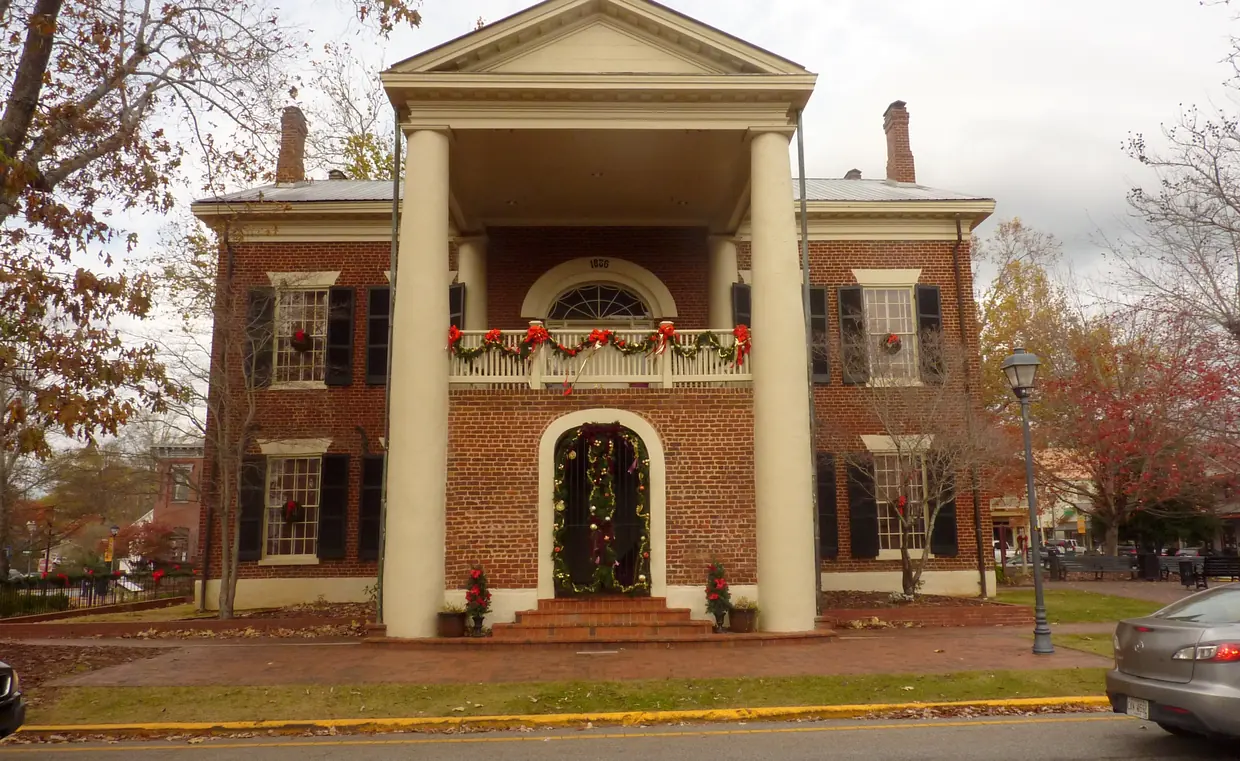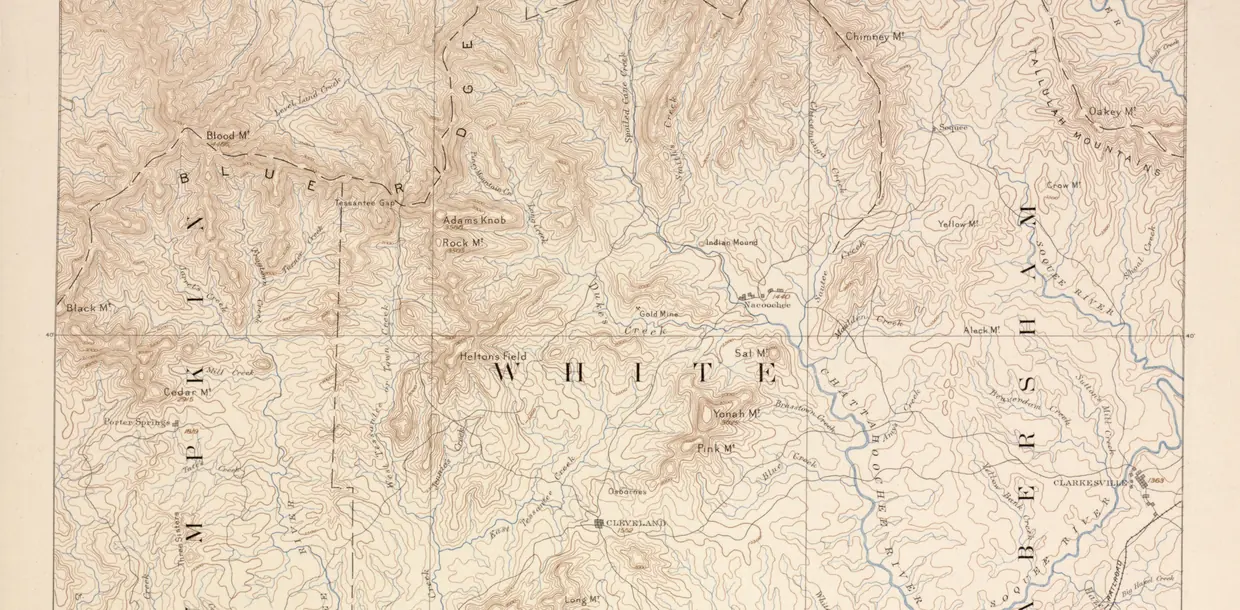
This page is about Lumpkin County, Georgia, where Dahlonega is the county seat. It lists what a local agent should check, or tell you to check, before you make an offer, and which office answers each question. It never says whether a particular parcel can be built on, split or permitted. Only the offices below can answer that.
The City of Dahlonega is the county seat of Lumpkin County. (City of Dahlonega, checked 2026-10-19)
City or county: the first question
Two governments, two vocabularies
- The City of Dahlonega regulates land through a Zoning Ordinance with named districts, while Lumpkin County's planning pages describe land use inquiries and land use permits rather than zoning. City of Dahlonega, checked 2026-10-19
- In unincorporated Lumpkin County, the Planning Department handles land use: to learn what you can do on a parcel, you submit a Land Use Inquiry form. Lumpkin County, checked 2026-10-19
- Lumpkin County land use permits are valid for a maximum of 6 months, and a land use permit is needed before a business license. Lumpkin County, checked 2026-10-19
The City of Dahlonega’s pages describe a zoning ordinance with named districts. Lumpkin County’s planning pages describe land use inquiries and land use permits, and the word zoning does not appear on the county pages we read. So for a city address, ask the City about zoning. For an address in unincorporated Lumpkin County, the county’s land use rules apply: submit a Land Use Inquiry to learn what you can do on the parcel. A good agent will ask which side of the city line a listing sits on before saying anything about use.
The Lumpkin County Planning Department is at 342 Courthouse Hill, Suite A, Dahlonega, phone 706-864-6894. (Lumpkin County, checked 2026-10-19)
The city historic district
The City of Dahlonega's Historic District covers all properties in the B-3 Historical Business and CBD Central Business districts defined by the City's Zoning Ordinance, and a Historic Preservation Commission oversees it. (City of Dahlonega, checked 2026-10-19)
If a property is in the City’s B-3 or CBD districts, it is in the Historic District, and the Historic Preservation Commission oversees it. Before you plan exterior work on such a property, ask the City what review applies.
Septic systems
What District 2 Public Health says
- Lumpkin County is one of the counties served by Georgia's District 2 Public Health. District 2 Public Health home page (Location, checked 2026-10-19
- District 2 Environmental Health says new on-site sewage (septic) systems must be permitted and inspected before use, and lots are reviewed before a permit is issued. District 2 Public Health, checked 2026-10-19
- District 2 Environmental Health states that not all lots are suitable for on-site sewage management. District 2 Public Health, checked 2026-10-19
- Records of approved septic systems are kept in the County Environmental Health Office, so buyers can ask there about a property's system. District 2 Public Health, checked 2026-10-19
- Lumpkin County lists an approved septic permit among the items required when applying for a building or mobile home permit. Lumpkin County, checked 2026-10-19
Not all lots are suitable for septic, new systems must be permitted and inspected before use, and the county lists an approved septic permit among the items needed for a building permit. For an existing home, ask Lumpkin County Environmental Health what record it holds for the system. For land, ask the same office before you rely on any plan to build. An agent should never tell you a lot will pass.
Lumpkin County Environmental Health is at 342 Courthouse Hill, Suite B, Dahlonega, phone 706-867-2730, open Monday to Thursday 8 to 5 and Friday 8 to 2:30. (District 2 Public Health, checked 2026-10-19)
Private wells
District 2 Environmental Health evaluates private wells and performs bacteriological testing of water samples; in District 2 only Hall, Hart, Union and White counties issue well construction permits. (District 2 Public Health, checked 2026-10-19)
Environmental Health can evaluate a private well and test a water sample. Lumpkin is not on District 2’s list of counties that issue well construction permits, so ask the office what records exist for the well you are buying, and ask your inspector about testing. You can read more on District 2’s well water and on-site sewage pages. Ask your inspector about radon testing too.
Flood maps
FEMA's Flood Map Service Center (msc.fema.gov) is the official public source for flood hazard information, and you can search it by address. (FEMA, checked 2026-10-19)
Look up the exact address on the FEMA Flood Map Service Center and save the result. Do not rely on anyone’s word, including an agent’s, that a home is outside a flood zone; ask your insurer what the map means for coverage.
Property records and tax bills
Where the records are
- Lumpkin County property records and GIS maps are online through qPublic, linked from the county's Assessors' Office and GIS pages. Lumpkin County, checked 2026-10-19
- The Lumpkin County Tax Commissioner's page links to 'Property Taxes Online' at lumpkincountytax.com for tax bills and payments. Lumpkin County, checked 2026-10-19
Use qPublic for the parcel record and map. Do not assume the seller’s tax bill or exemptions carry over to you; the homestead rules below apply to you as the new owner.
GREC license search
Check a license
Shows name, license number, type, status, renewal due date, firm name, firm role and a link to license history.
Source: GREC license search, checked 2026-10-19
qPublic: Lumpkin County property records
Parcel records and GIS maps
Linked from the county's Assessors' Office and GIS pages.
Source: Lumpkin County, checked 2026-10-19
FEMA Flood Map Service Center
Flood hazard lookup
The official public source for flood hazard information, searchable by address.
Source: FEMA, checked 2026-10-19
Georgia MLS
Multiple listing service
Says its listing exposure covers all 159 Georgia counties.
Source: Georgia MLS home page, checked 2026-10-19
FMLS
Multiple listing service
Another Georgia MLS; it describes itself as the largest and first MLS in Georgia.
Source: FMLS home page, checked 2026-10-19
Homestead exemption
The homestead rules
- To get a Georgia homestead exemption for a tax year, you must own the home and live in it as your legal residence on January 1 of that year. Georgia Department of Revenue, checked 2026-10-19
- The Lumpkin County Assessors' Office lists the state homestead application (LGS-Homestead) among forms that can be mailed to it, postmarked by April 1. Lumpkin County, checked 2026-10-19
- Georgia's Department of Revenue says homeowners can now apply for homestead beyond the historic April 1 deadline, up to the end of the 45-day window to appeal their assessment notice. Georgia Department of Revenue, checked 2026-10-19
- Georgia's standard state homestead exemption is $2,000, deducted from the 40% assessed value of the home, and applies to county and school taxes with some exceptions. Georgia Department of Revenue, checked 2026-10-19
To qualify for a tax year, you must own the home and live in it as your legal residence on January 1. Lumpkin County’s Assessors’ Office lists April 1 as its mailing deadline, and the Georgia Department of Revenue says state law now also allows filing through the 45-day appeal window on your assessment notice. Confirm the date with the Lumpkin County Tax Commissioner or Assessors’ Office. The state’s rules are on the Department of Revenue page.
Short-term rentals
In Lumpkin County, a short-term rental needs an approved Land Use Permit before a Business and Short-Term Rental License is issued. (Lumpkin County, checked 2026-10-19)
In unincorporated Lumpkin County a short-term rental needs an approved Land Use Permit before the rental license; see the county’s short-term rental page. We have not checked the City of Dahlonega’s rules, so for a city address ask the City. No agent should promise that a home can be rented short term.
Closings are run by attorneys
Attorney closings
- The Supreme Court of Georgia held in 2003 that only a licensed Georgia attorney may prepare a deed of conveyance for another or facilitate its execution. Supreme Court of Georgia, checked 2026-10-19
- A 2025 State Bar of Georgia formal advisory opinion says a lawyer can close a real estate transaction by video conference if the lawyer controls the closing from beginning to end. State Bar of Georgia, checked 2026-10-19
Your agent will work with a closing attorney, but the agent is not the one who prepares the deed. Ask the attorney’s office whom it represents in your transaction.
The offices
Georgia Real Estate Commission (GREC)
State licensing agency
Administers Georgia's real estate license law. Takes sworn written requests for investigation; it cannot replace a financial loss.
Source: Georgia Real Estate Commission, checked 2026-10-19
Lumpkin County Planning Department
County office · 342 Courthouse Hill, Suite A, Dahlonega
Land use inquiries and land use permits for unincorporated Lumpkin County. Phone 706-864-6894.
Source: Lumpkin County, checked 2026-10-19
Lumpkin County Environmental Health
District 2 Public Health office · 342 Courthouse Hill, Suite B, Dahlonega
Keeps records of approved septic systems and reviews lots before a septic permit. Phone 706-867-2730.
Source: District 2 Public Health, checked 2026-10-19
City of Dahlonega Historic Preservation Commission
City commission
Oversees the City's Historic District, which covers the B-3 Historical Business and CBD Central Business districts.
Source: City of Dahlonega, checked 2026-10-19
400 North REALTORS®
Local REALTOR® association
Serves members in Dawson, Forsyth and Lumpkin counties. A trade association, not a regulator.
Source: 400 North REALTORS®, checked 2026-10-19
Georgia Commission on Equal Opportunity
State fair housing agency
Enforces the Georgia Fair Housing Law. Complaints must be filed within one year of the alleged violation.
Source: Georgia Commission on Equal Opportunity, checked 2026-10-19
Questions to ask a Lumpkin County agent
- Is this address inside Dahlonega city limits or in unincorporated Lumpkin County?
- Which office should I ask about my intended use, and will you help me file the Land Use Inquiry?
- Is the property in the City’s Historic District?
- Is it on septic or sewer, on a well or public water, and what records does Environmental Health hold?
- What does the FEMA map show for this address?
- If I want to rent it short term, what permit applies at this address?
Describe places and rules, not people: a good agent answers questions about roads, offices and records, never about who lives on a street. See our fair housing statement.
Questions people ask
Which REALTOR® association serves Lumpkin County?
400 North REALTORS®, founded in 1973, is the local REALTOR® association that serves members in Dawson, Forsyth and Lumpkin counties. It is a trade association, not the state regulator.
Source: 400 North REALTORS®
Which MLS covers Dahlonega listings?
More than one can. Georgia MLS says its listing exposure covers all 159 Georgia counties, and FMLS is another Georgia MLS. Ask each agent which MLS they list and search in.
Source: Georgia MLS home page
Does Lumpkin County have zoning?
The City of Dahlonega regulates land through a Zoning Ordinance with named districts, while Lumpkin County's planning pages describe land use inquiries and land use permits rather than zoning. Check which government covers the parcel.
Source: City of Dahlonega
Where are septic records for a Lumpkin County home?
Records of approved septic systems are kept in the County Environmental Health Office, so buyers can ask there about a property's system.
Source: District 2 Public Health
When do I qualify for the homestead exemption after buying?
To get a Georgia homestead exemption for a tax year, you must own the home and live in it as your legal residence on January 1 of that year. Confirm the filing date with the Lumpkin County Tax Commissioner or Assessors' Office.
Source: Georgia Department of Revenue
Next step
Add these questions to the interview scorecard and see which agent answers them with an office name instead of a guess.
Laws, forms and practices change. Every rule on this page links to the office or statute that sets it; confirm with that source, or a Georgia attorney, before you rely on it.